

This is one of the most common in-market moves in Dallas-Fort Worth, and one of the least well documented. Most of what you will find comparing these two places is written to sell one of them.
Here is the honest version. The Park Cities and Southlake are not competing versions of the same product. They are coherent answers to two different questions, and the households happiest in each one asked a different question at the outset. Getting this decision right is mostly a matter of being clear about which question is actually yours.
The Trade in One Line
Moving out to Southlake, you gain space, land and newness. You give up proximity to the Dallas core and the walkability of a connected residential grid. Moving the other way, you are paying for location and accepting less house to get it. Everything else in this comparison is a detail underneath that trade.
What You Gain: Space, Land and a Newer House
The clearest and most immediate difference is how much you get.
Park Cities pricing reflects land in one of the most supply-constrained locations in North Texas. Highland Park and University Park are fully built out, geographically small, and completely surrounded by the city of Dallas. There is no more of it being made. A large share of what you pay for sits in the lot rather than the structure standing on it, which is why renovation and replacement activity is such a persistent feature of the market there.
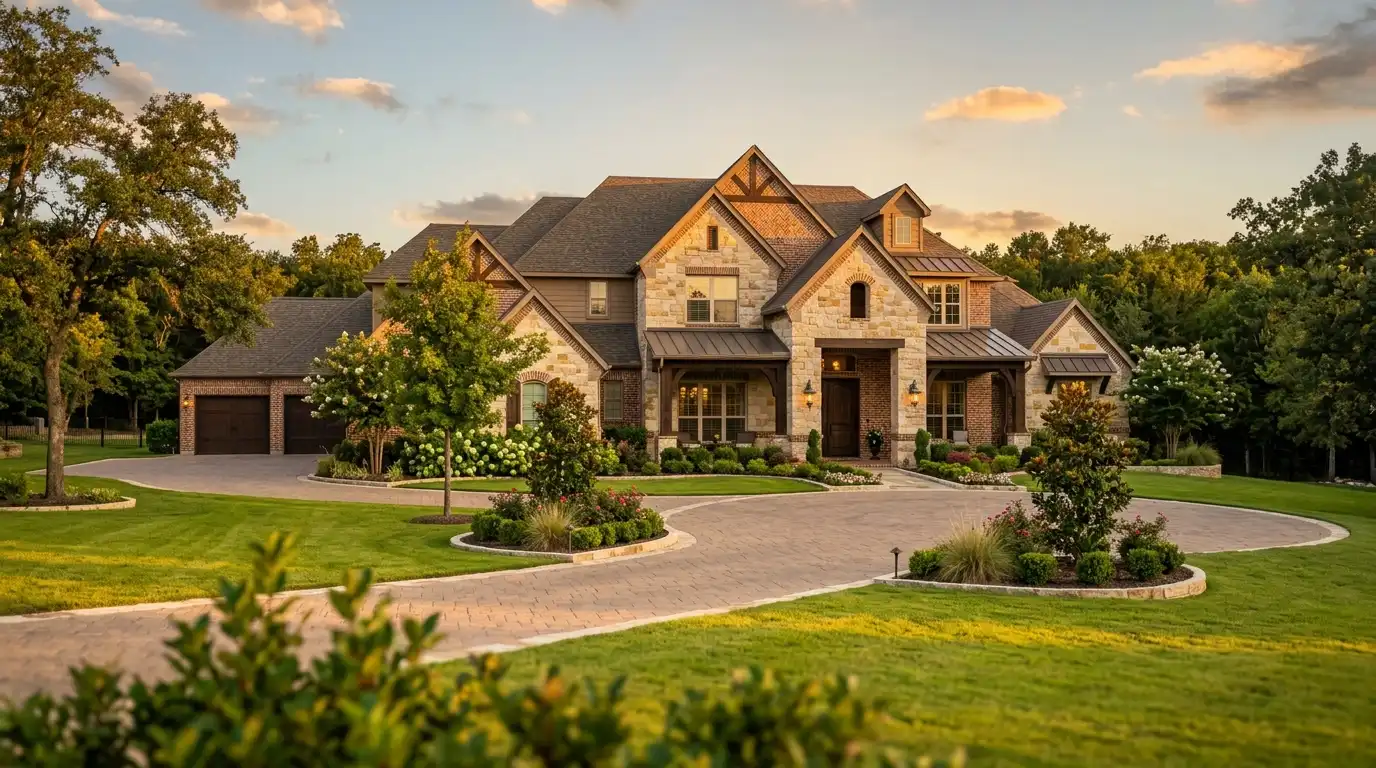
Southlake is a different proposition. Much of its luxury housing stock dates from the 1990s onward, lots are substantially larger, and the same money buys considerably more finished square footage. For a household that has outgrown a house rather than a neighborhood, this is usually the entire motivation, and it is a good one.
The related gain is condition. A newer house means fewer of the projects that come with older construction, and modern layouts that suit how most households actually live now. Anyone who has managed a renovation on a pre-war Park Cities home understands why this appeals.
What You Give Up: Proximity and the Grid
Two things go, and households tend to feel one of them harder than they expected.
The first is distance from the Dallas core. Roughly 25 to 30 miles, which sounds manageable and is manageable at eleven in the morning. It is a different experience in weekday peak. If someone in the household commutes to downtown Dallas or Uptown, that drive is their life five days a week, and they should be the one making this call rather than the person who works from home.
The second is subtler and catches people off guard. The Park Cities are built on a connected grid of established residential streets with retail sitting close to housing. You can walk to things. Southlake is a lower-density, car-oriented layout organized around a concentrated town center. Southlake Town Square is genuinely pleasant and genuinely walkable within its own footprint, but reaching it from most Southlake neighborhoods means getting in a car.
Households who valued walking to coffee on a Saturday morning notice this in the first month. It is not a flaw in Southlake, which was never designed for that. It is simply a thing that does not transfer.
The Airport Factor
The most underrated item in this entire comparison, and often the one that decides it.
Southlake sits just north of DFW International Airport. The Park Cities sit on the far side of the metroplex from it. For a household where someone flies weekly, that difference compounds into a very large number of hours per year, and it frequently tips a decision that otherwise looks evenly balanced.
If frequent travel is part of your life, weight this heavily. If nobody in the household flies much, ignore it entirely.
Taxes, and the Reset That Applies Either Way
These two places sit in different counties, different municipalities and different school districts, so the combined tax rates and the exemptions available are not identical. Those specifics are worth confirming with the appraisal district in the county you are buying into, because they change and because they vary by taxing unit.
The more consequential point applies regardless of direction. Texas caps annual increases in a homestead’s taxable value at 10 percent, and long-tenured owners often carry a taxable value well below current market. That accumulated benefit does not move with you. Your new home is assessed against current market value, so a household selling and buying at a similar price can still open a materially larger tax bill the following year.
Never budget from the tax line shown on a listing. That figure reflects the current owner’s history, not your future. This is covered in more depth in our guide to moving within Dallas-Fort Worth.
On Schools, and What We Will Not Tell You
Both of these places sit in well-known independent school districts, and it would be easy to write a paragraph comparing them.
We do not do that, and it is worth explaining why rather than quietly leaving it out. Fair housing law exists in part because real estate marketing has historically used schools as a proxy for describing who lives somewhere. Comparing districts by desirability is exactly the practice that rule is aimed at, whatever the intent behind it.
What we will give you is factual and useful: attendance boundaries do not always follow the lines people assume, and in this metroplex a single street can sit in a different district than the one two blocks over. If schools are driving your move, verify the attendance zone for the specific address, in writing, with the district itself, and do not rely on a listing description or a map that has not been updated. That advice is worth more than an opinion anyway.
The Move Back
Worth naming because it happens regularly and almost nobody writes about it.
Households do move from Southlake back toward central Dallas. The two common triggers are a commute that wore thin and an empty nest. A house sized for a family of five in a corridor chosen for space is a different proposition once the children have gone, and the calculation that once favored square footage tends to flip decisively toward proximity and lower maintenance. Uptown, Turtle Creek and smaller Preston Hollow properties absorb much of that movement.
None of which is an argument against moving to Southlake. It is an argument for being honest with yourself about which phase you are in, because both directions of this move are correct for the households making them at the time.
How to Actually Decide
Three things, in this order.
Drive the commute. Not the map, the actual route, on a weekday, in both directions, at the hours you would really travel. Do it more than once. This is the single highest-value hour you can spend on the decision, and it is free.
Price your current home properly before you shop. An in-market move is two transactions and the sale side sets the budget for the purchase side. Because Texas is a non-disclosure state, automated estimates here are weaker than buyers expect, particularly in this price band.
Settle your sequencing before you tour. Whether you buy first, sell first or use a rent-back changes what you can realistically compete for. We have written that up in how to buy before you sell in Dallas-Fort Worth.
Weighing This Move?
We work both sides of it regularly. Tell us what you own and what is driving the change, and we will give you a straight read on whether the move does what you want it to do.
Contact the Julie Provenzano GroupFrequently Asked Questions
Is Southlake or the Park Cities better?
They are not competing versions of the same thing, so there is no general answer. The Park Cities offer proximity to the Dallas core, walkable established streets, mature tree canopy and some of the most durable land values in North Texas, on smaller lots and in mostly older housing stock. Southlake offers substantially more square footage and land per dollar, newer construction and easier airport access, at the cost of distance from central Dallas. The right choice follows from where you actually need to be during the week.
How far is Southlake from downtown Dallas?
Roughly 25 to 30 miles depending on where in Southlake you start, and the mileage is the least useful part of the answer. What matters is the drive at the hour you would actually make it. That trip is comfortable at midday and materially longer in weekday peak periods. Anyone weighing this move should drive the real route on a weekday morning and again in the evening before deciding, because the map version and the Tuesday version are different journeys.
Do you get more house for your money in Southlake than the Park Cities?
Generally yes, and the difference is significant. Park Cities pricing reflects land in one of the most supply-constrained locations in North Texas, where a large share of the value sits in the lot rather than the structure. Southlake pricing buys more finished square footage and more land at a comparable number. Households moving out typically gain space and newness. Households moving in are usually paying for location and accepting less house to get it.
Is Southlake closer to DFW Airport than Dallas?
Yes, meaningfully. Southlake sits just north of DFW International Airport, while the Park Cities are on the other side of the metroplex from it. For a household where someone travels weekly, this is one of the most underrated factors in the entire comparison and it is often what tips a decision that otherwise looks close.
What are the property tax differences between the Park Cities and Southlake?
They sit in different counties, different cities and different school districts, so the combined rates and the exemptions available are not the same. The more important point for an in-market mover is that your accumulated homestead appraisal cap does not transfer. Your new home is assessed at current market value regardless of which direction you move, which frequently means a higher tax bill even at a similar purchase price. Model the new assessment and confirm the rates with the relevant county appraisal district.
Are the houses in Southlake newer than in the Park Cities?
As a rule yes. Much of Southlake’s luxury housing stock was built from the 1990s onward, with continuing new construction and a substantial supply of large recent homes. The Park Cities housing stock is considerably older, and a meaningful share of activity there involves renovation or replacement of existing structures. If low-maintenance and modern layouts matter to you, that difference is one of the clearest in the comparison.
Can you walk places in Southlake the way you can in the Park Cities?
Not in the same way. The Park Cities are laid out on a connected grid of established residential streets with retail woven close to housing. Southlake is a lower-density, car-oriented layout with a concentrated town center rather than distributed walkable streets. Southlake Town Square is genuinely walkable within itself. Getting to it from most Southlake neighborhoods means driving. Households that valued walking to coffee from their front door tend to feel this change immediately.
Do people move from Southlake back to Dallas?
Regularly, and it is one of the least discussed movements in this market. The two most common triggers are a commute that wore thin and an empty nest. A house sized for a family of five in a corridor chosen for space becomes a different proposition when the children have gone, and the calculation that favored square footage tends to flip toward proximity and lower maintenance. Uptown, Turtle Creek and smaller Preston Hollow properties absorb a good deal of that movement.
How long does it take to sell a Park Cities home?
It depends far more on pricing and condition than on the calendar. Because Texas is a non-disclosure state, sale prices are not public record and automated estimates in this market are working from thinner data than buyers assume. That is most true in exactly this price band and on blocks where houses differ substantially. Get a valuation built from actual comparable sales before you plan a two-sided move around an assumed number.
Should I rent in Southlake before buying there?
It is worth considering if the commute is your main uncertainty, because a lease is a cheap way to test the thing that most often drives regret. The counterargument is that renting means moving twice and re-entering the market later at whatever prices exist then. A middle path is to keep the search wide and drive the commute repeatedly at real hours before committing, which answers most of the same question at no cost.